
By Carolina Fernandez, Community Ownership Learning & Action Lab
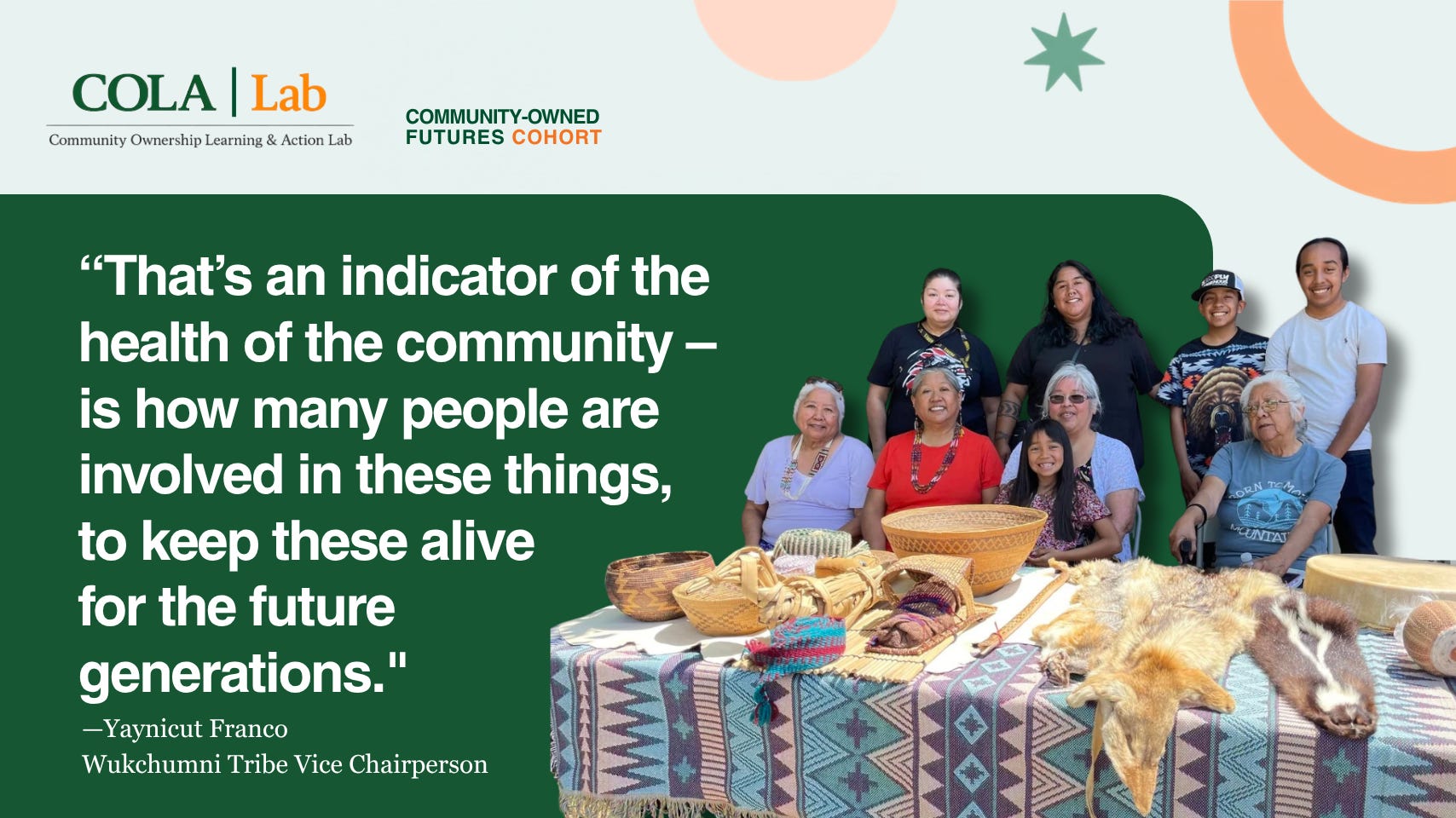
This story is part of a spotlight series on the Community-Owned Futures Cohort, an initiative of the Community Ownership Learning & Action Lab (COLA Lab) at the University of Miami. Through the cohort, we support emerging leaders who are testing new ideas and expanding what’s possible in community ownership. These stories are examples of real people building power, stability, and shared prosperity through collective stewardship of the places they call home.
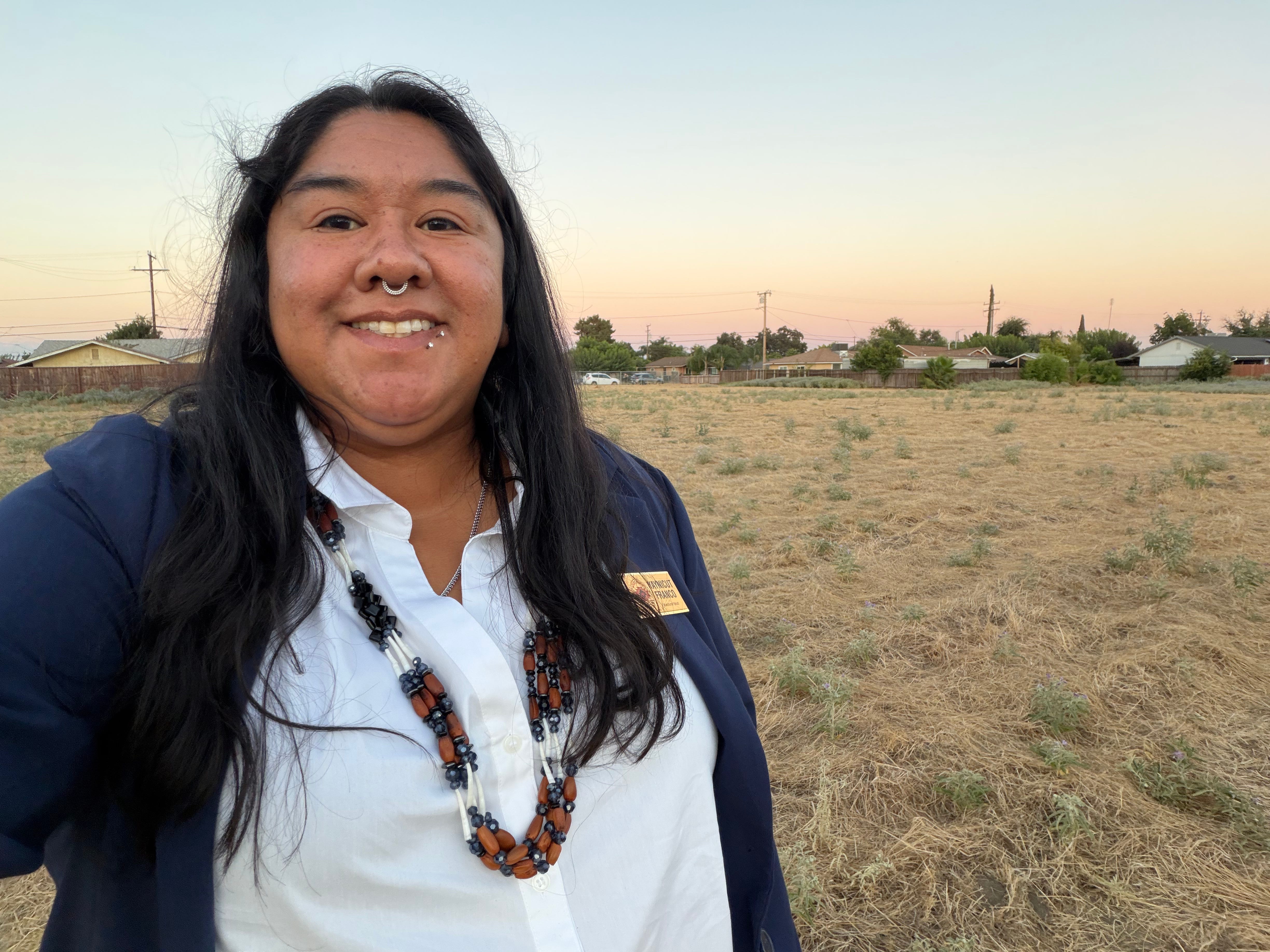
When Yaynicut Franco stands on the vacant lot that will soon become Bu’hach’hai Village, she thinks about her grandmother, Martha “Yaynicut” Wilcox Tapleras.
“It is something that my grandma dreamed of.”
Born in California’s Central Valley in the early 1900s, Grandma Martha spoke only Wukchumni until she was taken from her family and sent to a boarding school, forced into the government’s assimilation program.
“My grandma was a boarding school survivor. She didn’t speak English until she was 10 when she went to the boarding schools.
It just tells the story of our people — from how she grew up as a young child being able to live on the land, speak the language, and then having this huge shift with colonization, like having to learn [the English] language, taken from your home.”
Yaynicut says her grandmother spent the rest of her life fighting to make sure what had been taken from her people— language, culture, and relationship to land — would not disappear.
“As she got older, she made it a point to make sure that those things weren’t taken away from our people again.”
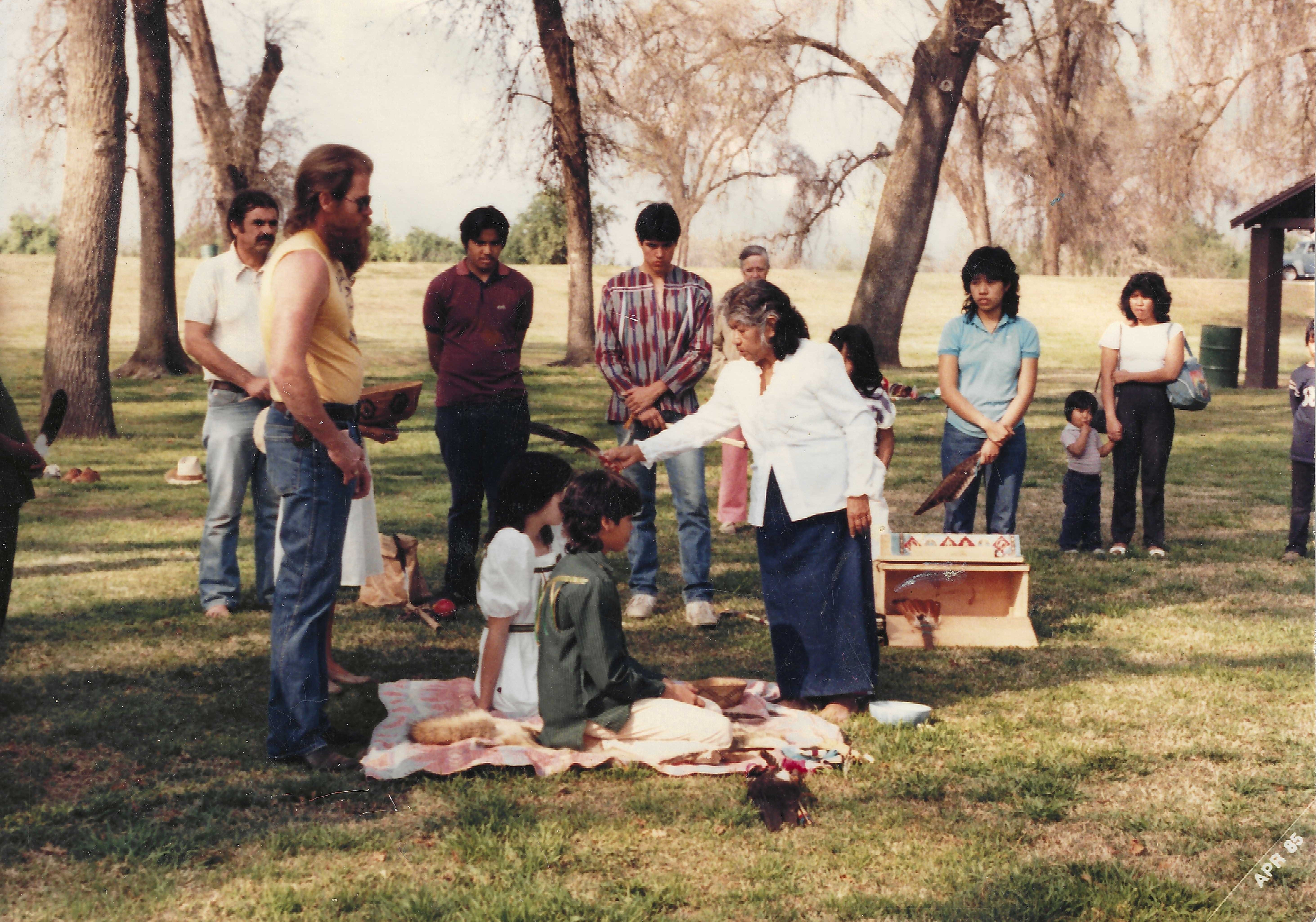
Today, that dream is beginning to take physical form. The Wukchumni Community Land Trust recently acquired the first land owned by the Wukchumni people in generations. For now it’s a vacant lot, but it will eventually become Bu’hach’hai Village, a place where Elders can age with dignity, families can remain close together, and a shared building can anchor the cultural life of a Tribe that’s endured for generations without a reservation.
Yaynicut serves as elected vice chairperson of the Tribe. She oversees much of the land and culture work, and in the last year, has stepped in to lead the CLT project.
“We get a lot of support, but at the same time, it’s like, man, if we would’ve had just even the federal recognition status, man, things would be a lot easier to do.”
For the Wukchumni Tribe, this project is about much more than housing.
A Yokuts band of California Natives with roughly 300 members, their territory spans the Sierra Nevada foothills between Tulare and Fresno counties, near what many people call the “gateway to the giant sequoias.” Like other California tribes, the Wukchumni were promised land through treaties the U.S. government never honored.
“They signed 18 treaties and then took them back to Congress and didn’t ratify them. The Wukchumni were one of those tribes. So there was that promise of land, and those things were not kept.”
The result was no reservation, forced relocation, and generations of displacement.
The land around them also changed. What had once been well-tended land with water running through it became part of one of the country’s largest agricultural regions, dominated by monocrops, pesticides, and cattle.
But that hasn’t stopped the Wukchumni’s spirit of community and solidarity.
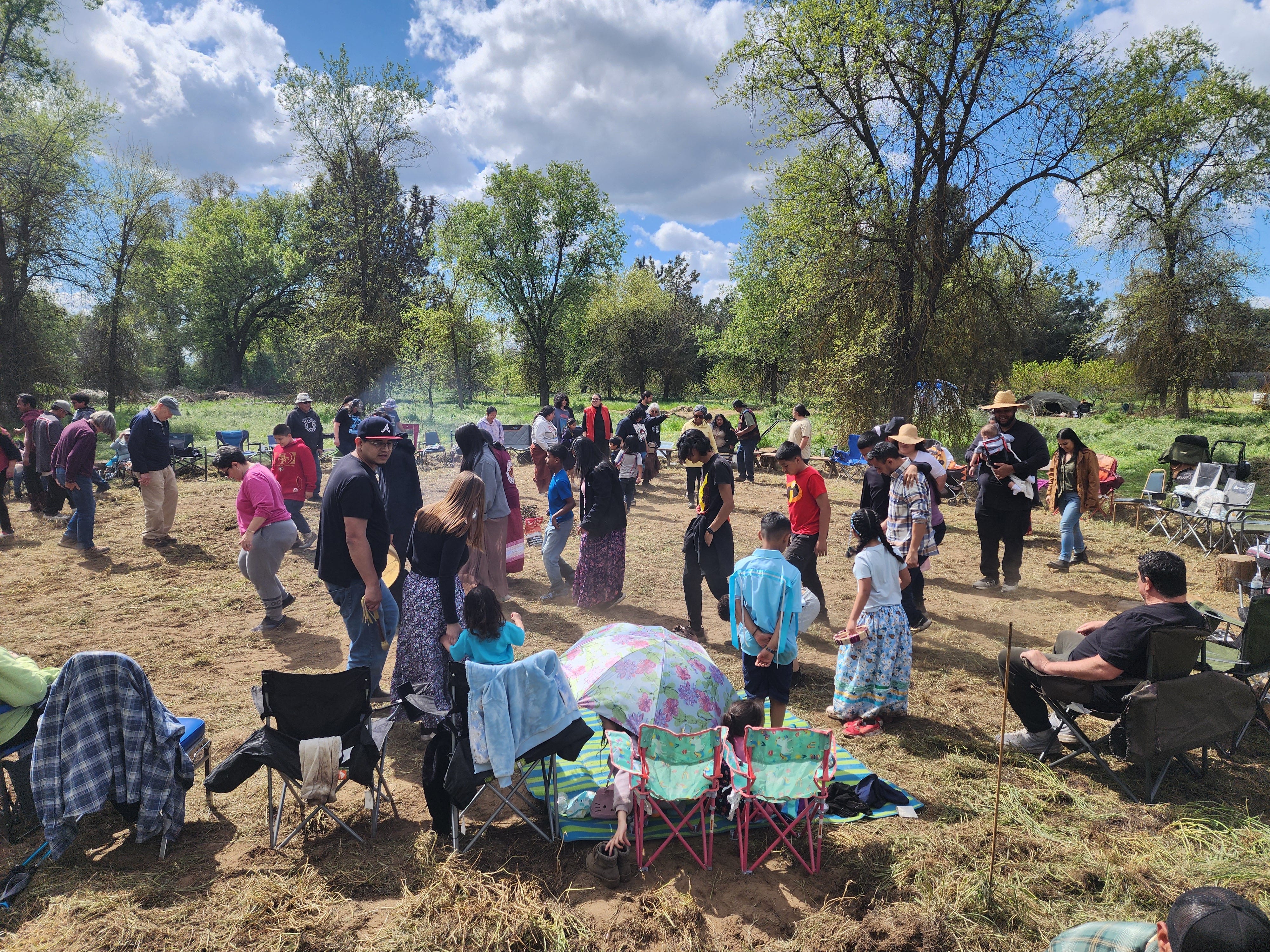
“We don’t have a reservation, but it hasn’t stopped us from providing services and meeting the needs of our tribal members. And over the last year we created a community land trust to help us address that issue with housing, land acquisitions, and cultural revitalization, focused on community.”
The CLT became the vehicle for a vision the community has always carried.
“Not having land has always been part of our conversations. And so it’s like, well, this is a model we can use that can help us get land, that could help us address housing, that could help us recreate this village that we’re talking about.
We also look at the health of our community, and we know that in our villages... our people were still living in our small communities and sometimes in traditional villages here in California... Back then we didn’t have child abuse. We didn’t have alcoholism. We had culture. People spoke the language, all of these things... And we think that we can get back to that if we live back in that kind of community setting, or had a space that could centralize where the people can go to be together.”
About three years ago, the Tribe began exploring the community land trust model. The California CLT Network, in Yaynicut’s words, “kind of recruited us to join.” Before long, she was serving on the Network’s board.
“I was like, this is way over my head, but also this is good because I’m going to learn all the things I need to know about CLTs through this role. From then, that’s when we really started to meet with other CLTs, learn about their structures.”
But before the Wukchumni could go forward with a CLT, Yaynicut had to explain why it was the right move.
“Our decision making, it is based on consensus… For me, the last maybe year and a half, two years, was about talking to the Tribe, the community, the Elders about why a CLT was needed. They were like, ‘We already have a nonprofit. Why can’t we just do everything under there?’ So we had to explain, this is a different model tied to funding, focused on housing.”
A CLT is a structure that can hold land permanently and support housing development. But there was a lot more to figure out beyond that.
“While we’re having these conversations, we start talking to funders about what would that look like to build something like that. I told them before we start really building out anything I need to know who would even live in these places. … So I asked them if they could pay for us to do a needs assessment of all of our tribal members… so we can see type of housing people are interested, all of their demographics, their income, where they were at with AMI, what tier they’re in, and just learning about the needs.”
The Tribe surveyed members through a Tribal Housing Needs Assessment funded by Enterprise Community Partners and supported by a Bay Area technical assistance provider. The assessment confirmed what many already knew: some community members were living in overcrowded homes, some considered themselves homeless, and many wanted a culturally centered village with housing and services.
Then, about six months after the needs assessment, a vacant lot became available on a street with family ties that traced way back. Yaynicut’s grandparents had built a house at the end of the street in 1970 with Self Help Enterprises. She was introduced to a funder and was able to share the Wukchumni history and aspirations to buy land where the Tribe could build housing and community spaces. Soon after, they were invited to apply for funding to buy the property.
“And then she sent us the funds to purchase the land. We didn’t have the CLT model up. I think we were still in the bylaw stages because we kept going back and forth with the language and making sure it was representative of us. But we had to move on the land.
We had a lawyer from the CLT network working with us, and we were able to buy that land under the CLT’s name. That’s when the community was like, ‘Oh this is really happening.’
All of our stuff was finalized, I think, in October. So it was already after we had the land.”
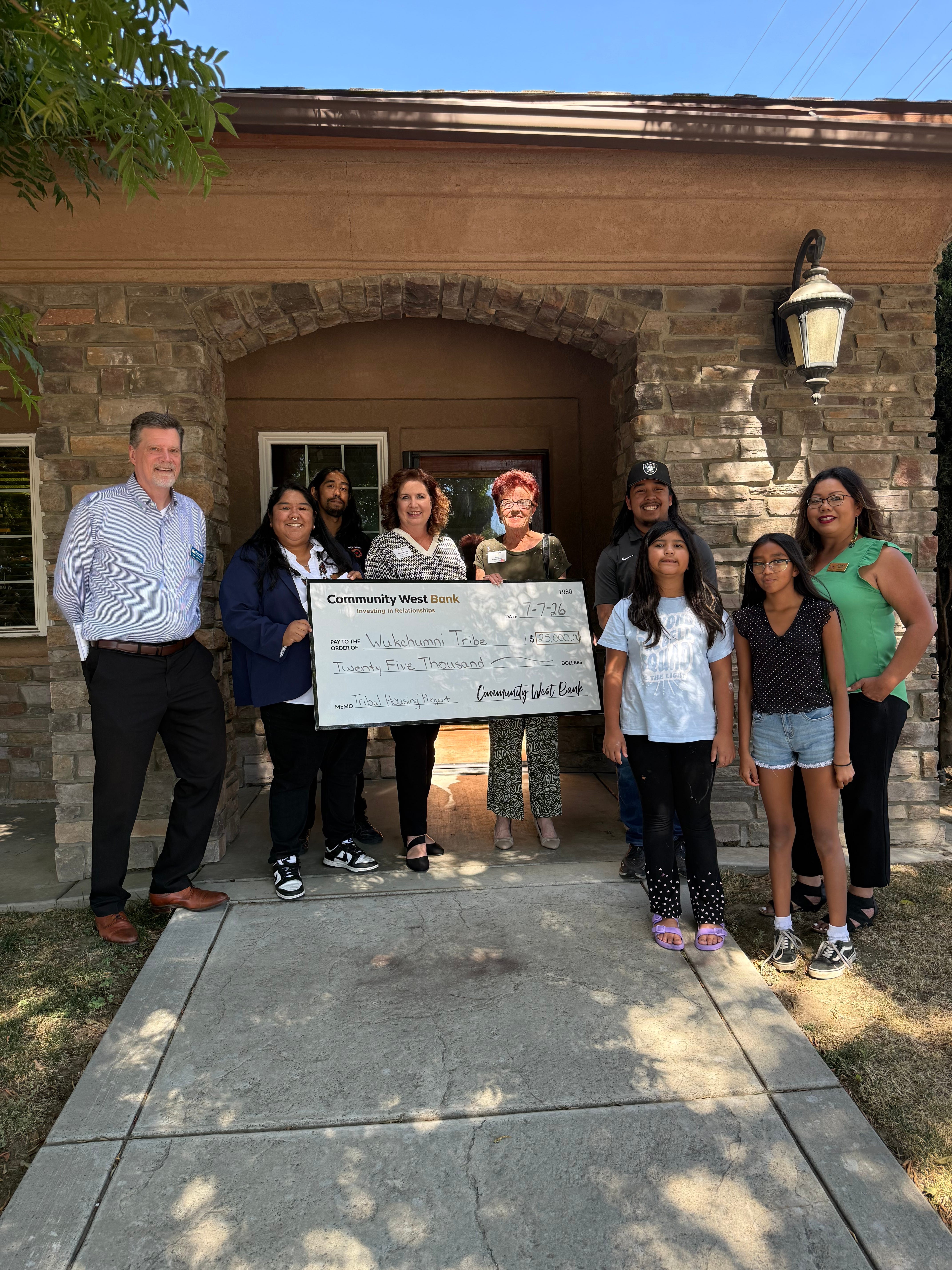
But for Yaynicut, the approach to the project matters as much as the acquisition itself.
“It’s also led by us and not another group like a consulting group... It’s been a hundred percent conversations and everything led by myself or our chairperson. So there’s been a lot of trust and... transparency throughout the process.”
That grassroots leadership is represented in the CLT’s governance structure. Yaynicut describes the six-member board:
“Our structure is very balanced. Two are elected from the tribal council, two are appointed from the Elders council by the Elders council, and then the tribal community—whoever the residents eventually are—they would elect from themselves those two representatives. But throughout the process, the Tribe has say in how we’re moving forward.”
While their governance structure reflects a tradition of consensus and intergenerational balance that predates the CLT model itself, there was no template for a non-federally recognized tribe launching a CLT in California’s Central Valley. Every step has required connective work by organizational leaders like Yaynicut.
“I never wanted to really do housing. It just kind of happened. It comes with the roles that I play within the community and the connections you start to make. And so anyway, that’s how the CLT model was sold to the community.
When Yaynicut learns from CLT peers, explains tribal land stewardship to the CLT field, builds relationships with funders, works with attorneys, coordinates community engagement, and helps carry the project alongside her other work, she and other leaders are creating pathways that other tribal communities will hopefully one day be able to use.
This “translation” work builds the field itself. It’s essential for making deals possible. And it’s the most under-resourced element of community ownership projects.
The Wukchumni are now in pre-development, working with architects, exploring tribal grants, and beginning to plan for engineering and infrastructure on a site that currently has none. When asked what it feels like to be breaking ground on the first piece of land the Tribe has owned in generations, Yaynicut says:.
“A lot of excitement, anticipation, like this has been a long time coming... I get emotional thinking about it too.”
Then she lands on the word that carries the weight of everything:
“I just think about resilience. Being able to get to this point, and being able to also share our stories. That’s been the most powerful thing, is being able to share our story of resilience and how we’d be able to get here. That’s what’s going to help to guide us in the future.”
Bu’hach’hai means family in the Wukchumni language. That’s ultimately what the CLT is being built to steward: beyond land, it’s the relationships, culture, language, and belonging that allow a people to remain connected through shared history and into a strong, shared future.
To learn more about the Wukchumni and the work taking shape beyond this first village, or to get in touch with the COLA Lab, check out the links below.
Learn more about Wukchumni CLT and follow them on social
Explore the Community Ownership Learning & Action Lab (COLA Lab)
Join the COLA Lab’s mailing list to receive stories from the field and research-based resources
Contact the COLA Lab at communityownership@miami.edu